

The Perth Scorchers vs Sydney Sixers Qualifier was dictated by a brutal 40°C thermal ceiling at Optus Stadium. From an analyst’s perspective, this extreme heat significantly altered the pitch’s behavior, transforming the “Furnace” into a high-friction environment where the ball maintained its hardness but gripped the surface with “skiddy” unpredictability. The Scorchers, led by their top-tier standing in the BBL standings, exploited these conditions by selecting a lineup optimized for high-velocity impact.
The technical edge belonged to the home side’s reading of the “par score.” On a day where the mercury peaked, a total of 147 was analytically equivalent to a 170+ score due to the physical toll on the chasing side. The Sixers’ failure to adjust their “Expected Runs” (xR) model during the early stages of the chase ultimately led to a high-risk strategy that favored the bowling side’s defensive clusters and field positioning.
Offensive Architecture: Allen’s Strike Rate Volatility – Perth Scorchers vs Sydney Sixers
Perth’s batting blueprint revolved around the hyper-aggressive output of Finn Allen. His innings was a masterpiece of vertical hitting, utilizing a high backlift to counter the bounce of the Sydney attack. Allen’s 49 off 30 deliveries saw him surpass the BBL 2026 season record for maximums, reaching 37 sixes. His ability to ramp a 145kph Mitchell Starc delivery over the sightscreen forced the Sixers to abandon their preferred “top-of-off” lengths.
| Metric Category | Performance Data | Tactical Outcome |
|---|---|---|
| Finn Allen SR | 163.3 | Disrupted Sixers’ powerplay lengths |
| Starc Efficiency | 1/28 (4) | Controlled the “Battle of the Mitches” |
| Middle Over RR | 5.8 runs/over | Sixers’ squeeze limited the ceiling |
| Dot Ball % | 38% (Total) | Defensive discipline by both units |
While Allen provided the ignition, the Sixers responded with a sophisticated “Middle-Order Squeeze.” Jack Edwards and Ben Dwarshuis shifted to a cross-seam heavy strategy, removing pace off the ball to neutralize Cooper Connolly’s timing. This tactical shift saw the BBL live score plateau during the middle ten overs, requiring a late-order salvage mission from Ashton Turner (29) and Jhye Richardson (20) to reach the 147-run mark.
The Breakdown of the Sixers’ Chase Geometry – Perth Scorchers vs Sydney Sixers
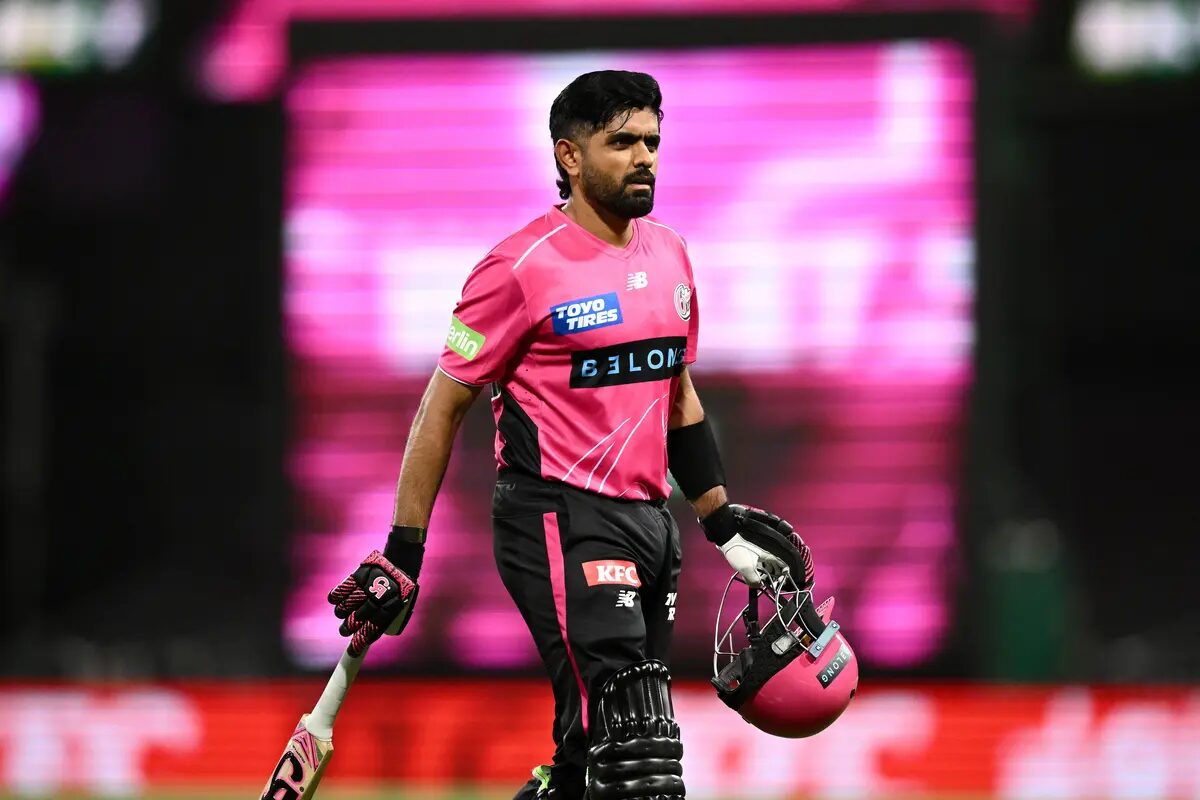
The Sydney Sixers’ response was a study in technical disintegration. Their chase model collapsed during the Powerplay, largely due to a rare lapse in Babar Azam’s footwork geometry, leading to a second-ball stumping. At 23/3, the Sixers were forced into a low-probability recovery phase. While Steven Smith BBL metrics remained elite—highlighted by his first-ever T20 six on his opening delivery—he was forced to play a high-usage role without a reliable partner.
The “comical” run-out of Sean Abbott served as a data outlier that underscored the physical fatigue of the match. The friction of the dry turf caused Abbott’s bat to “plug” vertically, a mechanical failure that ended a burgeoning partnership. This left Smith isolated against a bowling attack that had identified a clear technical weakness in the Sixers’ middle-order: a susceptibility to the “climbing” short ball on the Perth deck.
High-Velocity Impact: Beardman’s Targeted Spell
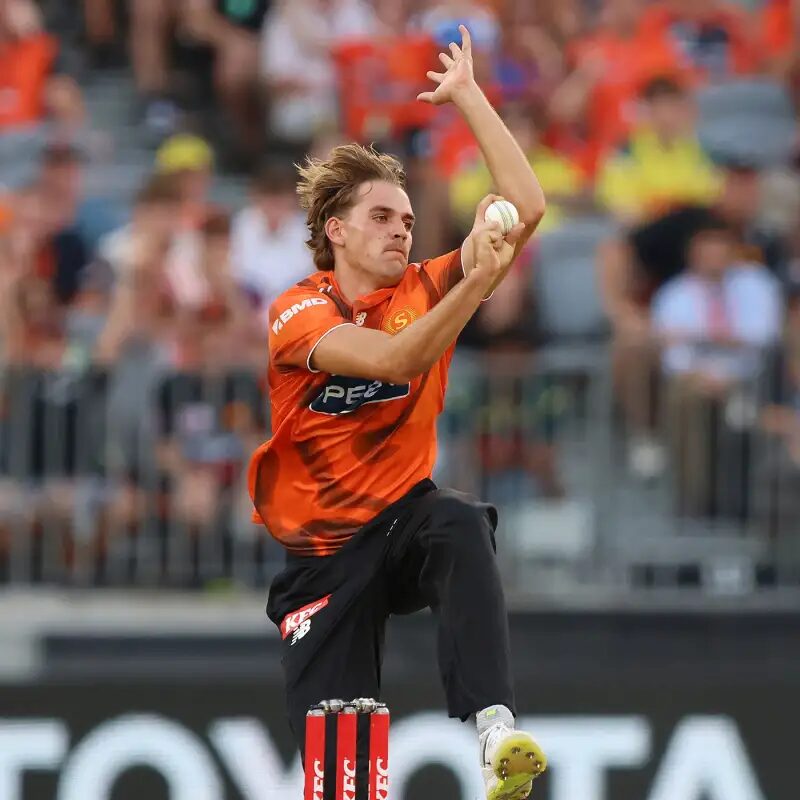
The match reached its technical climax when 20-year-old Mahli Beardman was tasked with defending the total against Steve Smith. Beardman’s spell was defined by “hostility analytics,” where he maintained an average velocity above 140kph. His tactical execution focused on the “rib-cage” line, cramping Smith’s room and forcing the batsman to play in a congested fine-leg arc rather than his preferred cover-drive zones.
- Velocity Peak: 142.5kph delivery to unsettle the set batsman.
- Match-Winning Scalp: A 139kph short ball that induced a mistimed pull from Smith.
- Tactical Validation: Beardman’s performance justified his recent T20 international call-up.
By dismissing Smith, Beardman effectively lowered the Sixers’ Win Probability (WP) to near zero. Mahli Beardman wickets vs Sydney Sixers 2026 will be cited by analysts as the primary reason Perth defended a sub-150 total, proving that raw pace remains the most effective variable in the “Furnace” when used with tactical precision.
Captaincy and Strategic Disciplines
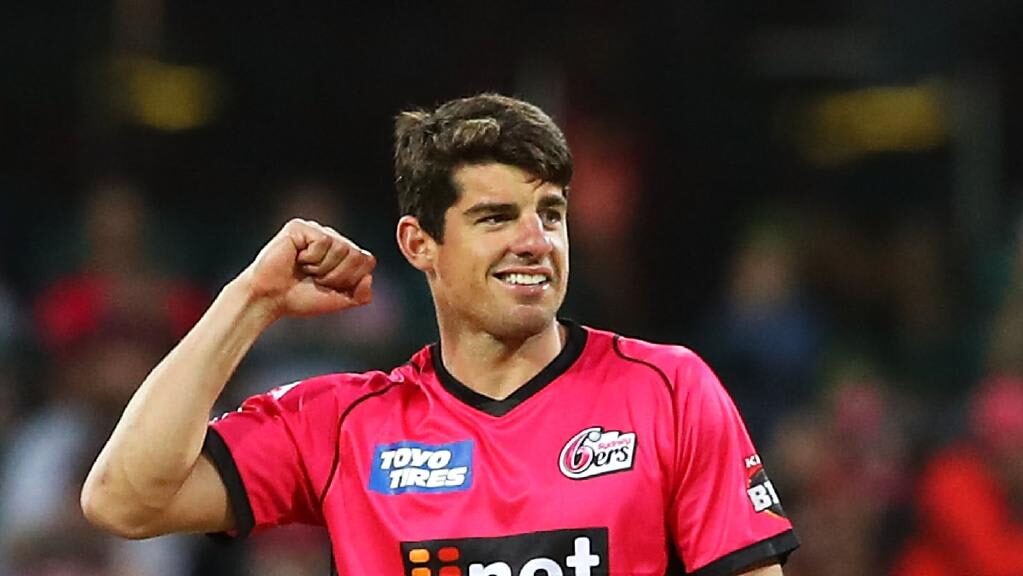
A comparative look at the leadership during the Perth Scorchers vs Sydney Sixers Qualifier highlights the Scorchers’ superior adaptability. Ashton Turner utilized a “cluster-bowling” strategy, pairing high-pace options with defensive spin to keep the Sixers in a constant state of transition. In contrast, Moises Henriques’ post-match reflection pointed to a lack of “mental accumulation,” admitting the Sixers’ hitters tried to resolve the chase too rapidly.
The Scorchers’ fielding discipline also provided a significant “Runs Saved” (RS) metric boost. While the Sixers appeared drained by the 40°C environment, Perth’s athletes maintained high-intensity coverage in the deep. This defensive cohesion, paired with a seam-heavy attack that exploited the “skiddy” nature of the pitch, ensured the Sixers never found the rhythm required to threaten the target.
Final Trajectory: The Road to the Furnace Decider
With the Qualifier in the books, the Scorchers have optimized their path to the title. By securing hosting rights for the January 25 Grand Final, they capitalize on a home-ground win-rate that is statistically the highest in the league. For the fan base, searching for Perth Scorchers home final ticket information is the next step as they prepare to defend their fortress one last time this season.
The Sydney Sixers must now re-calculate. They head to the SCG for the Challenger, where they will have a “second chance” against either the Hurricanes or the Stars. While the Sydney Sixers vs Perth Scorchers head to head record proves they can beat anyone on their day, they will need a more balanced technical approach to batting to earn a return flight to Perth. The championship remains a two-horse race, but the Scorchers currently hold the tactical high ground.
About the Author


