

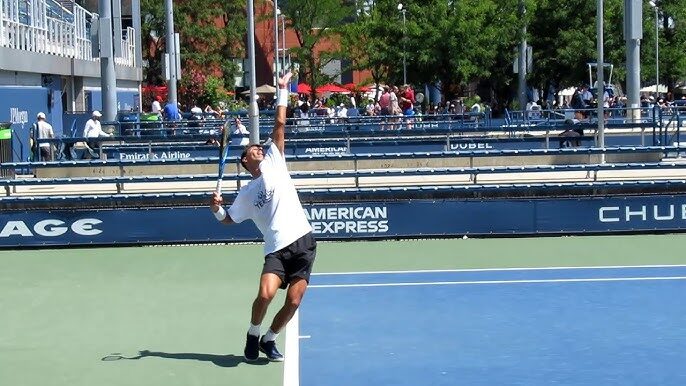
Alexei Popyrin Australian Open – The analytical narrative of Monday night’s opener centered on a clash of diametrically opposed philosophies. Alexei Popyrin entered the court looking to weaponize the fast Melbourne surface, utilizing his 6’5″ frame to dictate play from the first strike. Tactically, Popyrin’s objective was clear: keep points under four shots and exploit his massive +1 serve-forehand combination. Opposite him, Alexandre Muller executed a “bend but don’t break” strategy, intentionally deep-positioning on returns to neutralize the Aussie’s pace and force the match into physical, high-shot-count territory.
Statistical Deep Dive: Service Dominance vs. Return Efficiency
In elite tennis, it is statistically rare for a player to strike 40 aces and still emerge on the losing side of a five-set match. This anomaly highlights a deficit in “clutch” point conversion rather than a lack of raw power. While the Alexei Popyrin Australian Open data shows he won 75% of his first-serve points, his second-serve win percentage dipped significantly during the pivotal tiebreaks. Muller, by contrast, focused on a high-percentage first-serve strategy (72% in), choosing accuracy over velocity to prevent Popyrin from stepping inside the baseline on returns.
| Tactical Metric | Alexei Popyrin | Alexandre Muller |
|---|---|---|
| Aces (Total) | 40 | 5 |
| Unforced Errors | 52 | 34 |
| Break Points Converted | 5/10 | 3/10 |
| Max Points in a Row | 9 | 6 |
| Winning Set 1 | 6-2 | — |
| Super Tiebreak Score | 4 | 10 |
Set 4 and 5 Breakdown: The Momentum Mechanics – Alexei Popyrin Australian Open
The match pivoted on Popyrin’s inability to consolidate tactical advantages during high-leverage moments. In the fourth set, the Aussie led 4-2 and held a 5-2 lead in the tiebreaker, effectively putting the match on his racquet. However, the data shows a spike in unforced errors (14 in the fourth set) as fatigue began to set in.
- Service Reliability: Popyrin failed to land a first serve on the final two points of the fourth-set breaker.
- Baseline Discipline: Muller increased his heavy spin on the backhand wing, targeting Popyrin’s strike zone and forcing errors.
- The Final Break: Serving for the match at 5-3 in the fifth, Popyrin’s “Serve+1” execution failed, allowing Muller to break back at love.
Physical and Environmental Factors in Performance – Alexei Popyrin Australian Open
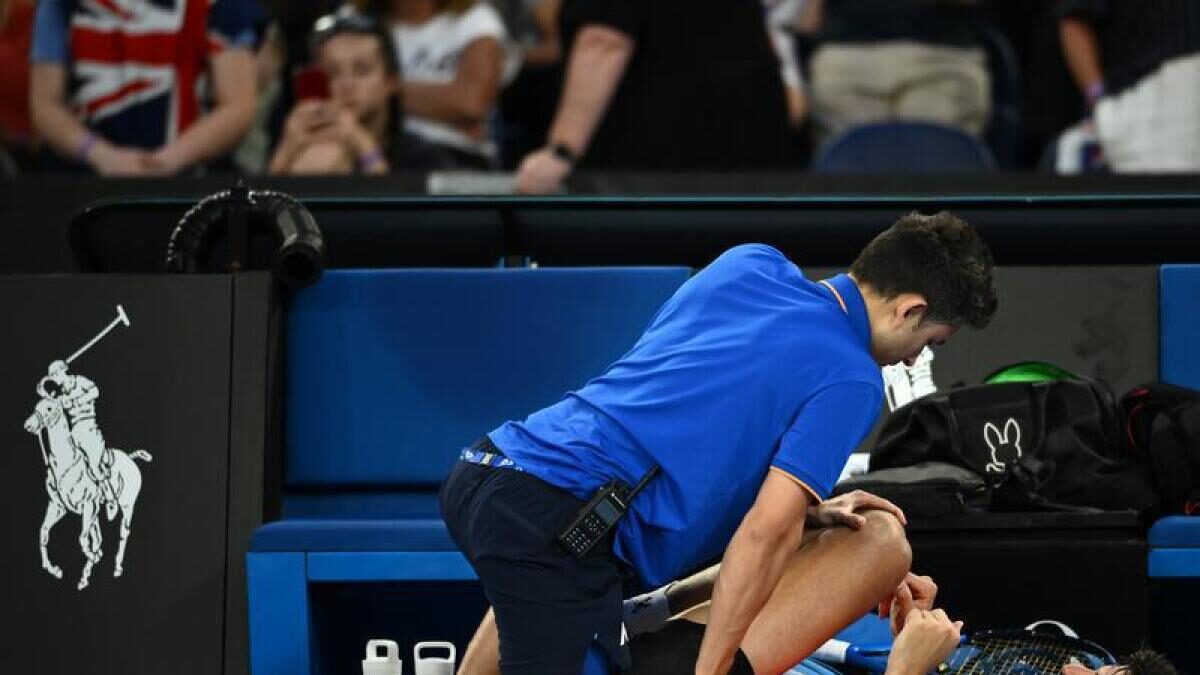
Analytics cannot ignore the physical variables that hindered Popyrin’s movement in the latter stages. A medical timeout for a calf strain at 5-6 in the fourth set coincided with a notable drop in his lateral defensive speed. Furthermore, a technical “audio drama” in the stadium created a 10-minute cooling period that favored the Frenchman’s endurance-based game over Popyrin’s rhythm-dependent power game. By the time the super tiebreak arrived, Popyrin’s “max points in a row” metric fell, as he dropped eight of the first nine points in the 10-point decider.
Ranking Implications: The ATP 2026 Landscape
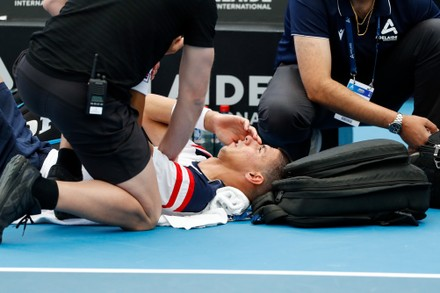
This defeat carries heavy consequences for the Alexei Popyrin Australian Open legacy and his immediate future on tour. Entering the week at No. 49, Popyrin was desperate to defend points from his previous year’s performance. Instead, this seventh consecutive loss—a streak dating back to August 2025—leaves him vulnerable to a significant ranking slide. For a player who reached a career-high of No. 19 just six months ago, the shift from a seeded threat to an unseeded underdog will make his path through upcoming 1000-level events in Indian Wells and Miami considerably more difficult.
Tactical Conclusion: Rebuilding the “Cool Head”
The data from Melbourne proves that Popyrin’s weapons remain elite; 40 aces are a testament to world-class mechanics. However, the “mental performance” gap noted by analysts like Lleyton Hewitt remains the primary hurdle for the 2026 season. To reverse his current slump, Popyrin must find tactical ways to win when his first serve isn’t providing a “free” exit. This involves improving mid-rally patience and reducing the unforced error count during tiebreaks. While the Alexei Popyrin Australian Open chapter of 2026 ends in heartbreak, the underlying stats suggest the potential for a resurgence is there—if he can find the discipline to match his undeniable power.
About the Author


