

The opening leg of the Chelsea Arsenal EFL Cup semi-final provided a high-level chess match under the relentless London rain. Mikel Arteta’s Arsenal operated with their signature 4-3-3 “total control” system, looking to pin Chelsea into their own third through aggressive counter-pressing. In contrast, Liam Rosenior’s debut home tactical plan was largely dictated by necessity; missing the creative hub of Cole Palmer, the Blues adopted a pragmatist’s stance. The early phases of the match were a battle of spacing and rhythm, as Arsenal sought to exploit the half-spaces while Chelsea attempted to maintain a compact, disciplined mid-block to frustrate the league leaders.
Dead-Ball Geometry: The Arsenal Set-Piece Blueprint
Arsenal’s opening goal in the 7th minute was a masterpiece of dead-ball coordination. By using “screening” runs to isolate Ben White at the near post, Declan Rice’s delivery capitalized on a lapse in Chelsea’s zonal marking. This marked the Gunners’ 24th set-piece conversion of the campaign, highlighting a coaching edge that often compensates for lack of open-play rhythm. Chelsea’s struggle to manage height and second balls in the box remained a glaring tactical vulnerability throughout the first half, forcing their midfield into deeper, more defensive positions than Rosenior likely intended.
Tactical Data Overview: Performance Metrics
| Tactical Indicator | Arsenal (Systemic) | Chelsea (Reactive) |
|---|---|---|
| Pass Completion | 89% (High Recycling) | 76% (Direct Verticality) |
| Set-Piece Goals | 1 (Ben White) | 0 (Zonal Lapses) |
| Defensive Anchor | William Saliba (100% Duels) | Robert Sanchez (Critical Error) |
| Transition Goals | 0 (Controlled Build) | 2 (Garnacho Sprints) |
| Success of High Press | 14 Recoveries in Final Third | 5 Recoveries in Final Third |
Defensive Entropy and the Sanchez Error Factor
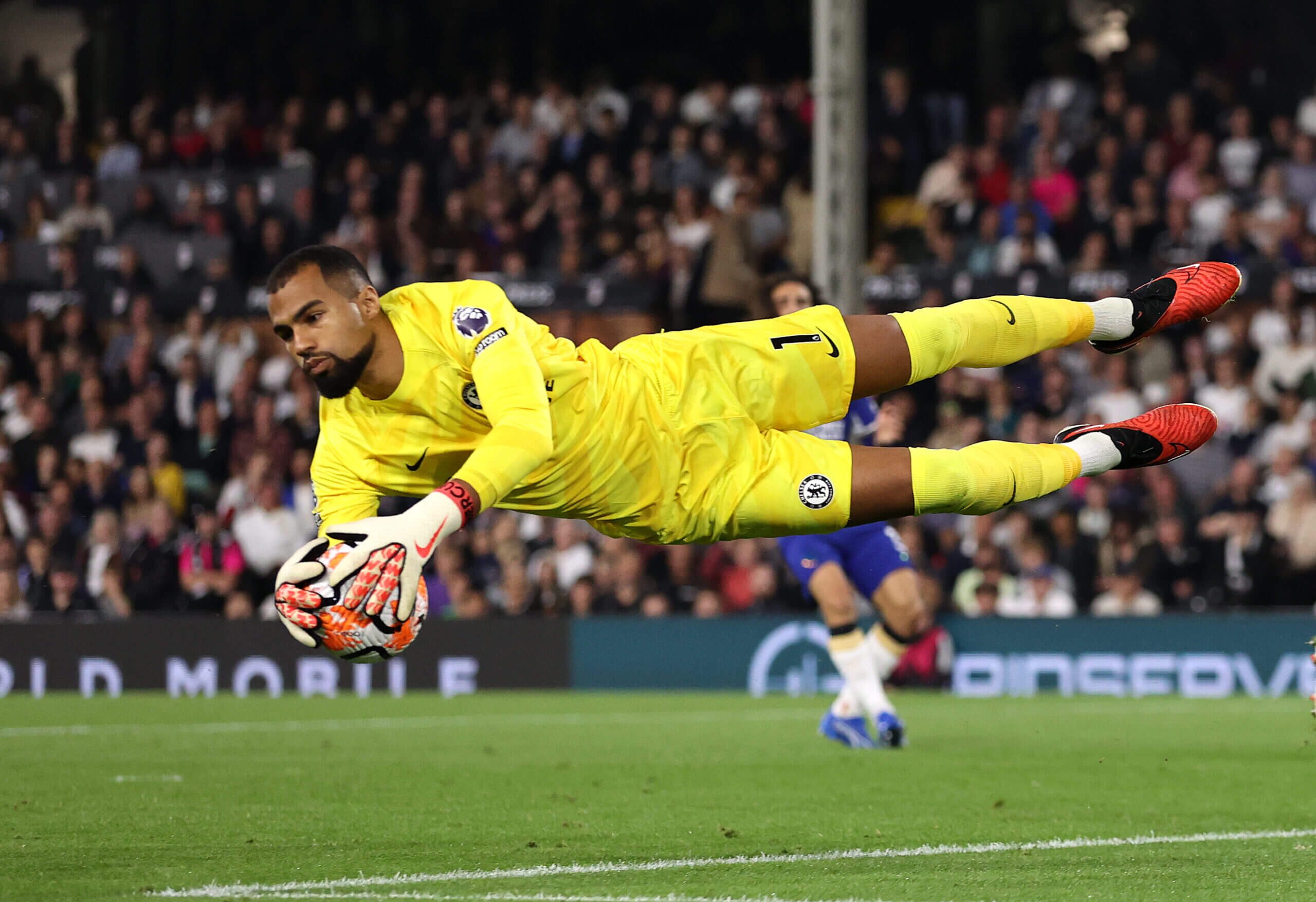
The second half saw a breakdown in Chelsea‘s defensive cohesion, sparked by an unforced error. Robert Sanchez’s “grotesque” handling lapse in the 49th minute gifted Viktor Gyökeres a tap-in, effectively dismantling Chelsea’s low-block strategy. When forced to chase the game, the space between Chelsea’s defense and midfield stretched, allowing Martin Zubimendi to operate as a “shadow striker.” His clinical 71st-minute finish was the result of Arsenal finding vertical passing lanes that were previously congested, pushing the scoreline to a seemingly insurmountable 3-0.
- Robert Sanchez mistake cost Chelsea against Arsenal: A moment of poor technical execution that forced a premature tactical shift.
- Who scored for Arsenal in the 3-2 win over Chelsea: White, Gyökeres, and Zubimendi through varied tactical phases.
- The Saliba Effect: William Saliba’s recovery pace allowed Arsenal to maintain a high defensive line despite the wet surface.
The Garnacho Variable: Exploiting High-Line Vulnerabilities

The introduction of Alejandro Garnacho in the 55th minute introduced “controlled chaos” into the match. By replacing Marc Guiu, Rosenior shifted Chelsea’s attack to target the space behind Arsenal’s inverted full-backs. Garnacho’s two goals (57’ and 83’) were direct results of identifying the “weak side” of Arsenal’s transition. His pace forced the Gunners’ backline to drop deeper, which inadvertently created a disjointed midfield—a rare tactical flaw in Arteta’s usually rigid structure that nearly cost them their entire lead.
Offside Margins and the Post-Match Psychological Fallout – Chelsea Arsenal EFL Cup

The game’s tactical integrity was replaced by raw emotion in the 94th minute. A Gabriel Jesus-led break appeared to have earned a decisive penalty, but the VAR-backed offside call highlighted the risk of Arsenal’s aggressive offensive positioning. This “stolen” moment acted as a catalyst for the post-match “handbags” at the tunnel entrance. Tensions between Enzo Fernandez and Zubimendi illustrated the friction between two elite pivots, with the physical confrontation reflecting the frustration of a Chelsea Arsenal EFL Cup tie that refused to follow the expected script.
- Why was there a fight after Arsenal Chelsea EFL Cup: High-stakes frustration and a contentious late VAR reversal.
- Mikel Arteta reaction: Dissatisfaction with the team’s loss of structural discipline in the closing 15 minutes.
- Liam Rosenior’s Impact: Successful use of game-state management to salvage a competitive scoreline.
Final Analysis: A Strategic Stalemate Awaiting the Second Leg – Chelsea Arsenal EFL Cup
As the analysis moves toward the return leg on February 3, 2026, the data suggests a tie that is far from settled. Arsenal maintains the statistical advantage, but the 3-2 scoreline reflects a fragile tactical superiority. The Gunners must address the transitional gaps exposed by Garnacho, while Chelsea requires a more robust response to Arsenal’s set-piece routines. With a Wembley final likely against Manchester City on the horizon, the second leg of this Chelsea Arsenal EFL Cup semi-final will be a definitive test of which manager can better optimize their system under pressure.
About the Author


