

Perth may be far from Silicon Valley, but on Tuesday night the city felt the impact of a failure that began 14,000 kilometres away inside Cloudflare — a company most Australians couldn’t name until now. At 10.50pm AEDT, a configuration error triggered widespread 500-level outages across Cloudflare’s global network. Within minutes, major platforms like ChatGPT, Spotify, Amazon, X, gaming services and media sites went down, along with airport systems in Perth, Adelaide, Brisbane and Melbourne.
There was no hack or cyber-attack — just one oversized file crashing a critical system and making the internet briefly blink. And in that blink, Australia was reminded of a warning cybersecurity experts have repeated for years: the internet looks decentralised, but in practice, it is not.
What actually happened — Cloudflare Outage Perth


Cloudflare, which handles traffic for nearly 20% of the internet, confirmed that an internal configuration file auto-generated during a threat detection update grew beyond the expected size. That file caused a key software component to crash, cascading into global outages.
Not for the first time, a single point of failure quietly triggered an international domino effect.
Cloudflare issued an apology and “took responsibility for letting the internet down today,” but for researchers — and increasingly, governments — this wasn’t just an outage. It was a warning signal.
A Perth-specific wake-up call :Cloudflare Outage Perth
Perth depends heavily on cloud-based systems for airport operations, logistics, public services and even emergency communications. This outage may not have lasted long, but it revealed how fragile the infrastructure behind everyday life really is.
A telecommunications engineer at Curtin University, who requested not to be named due to workplace policy, put it bluntly:
“It wasn’t a hack — it was just a misconfigured infrastructure update that caused global disruption. If that doesn’t terrify you, it should.”
In other words: the danger is not just cyber criminals.
The danger is centralisation itself.
The invisible monopoly problem – Cloudflare Outage Perth

Over the last decade, a handful of what cybersecurity expert Alan Woodward calls “internet gatekeepers” have quietly taken over essential web functions. These include:
- Cloudflare
- Amazon Web Services
- Google Cloud
- Akamai
- Fastly
- Microsoft Azure
The problem is not that these companies exist — it’s that everywhere else has become dependent on them.
Australia has already tasted this before.
The Optus outage, the AWS failure, the CrowdStrike crash, the Roblox outage — they all told the same story:
One company fails → millions of Australians lose access → nobody knows who to blame.
“The biggest company you’ve never heard of” (Cloudflare Outage Perth)

Cloudflare’s job is to make websites faster, safer and harder to attack.
But that means it also serves as a single choke point.
Woodward once described it as “the biggest company you’ve never heard of.”
He was right. But after this week, Australians know the name.
And that alone signals a shift.
Perth airport systems: a quiet risk (Cloudflare Outage Perth)

The outage temporarily disrupted flight status pages and airport data. Aviation industry sources confirmed that check-in and runway operations were not severely impacted — but the public information platforms that feed into passenger planning went dark.
A Perth-based IT aviation contractor told us:
“It was brief—but it shows how much we rely on third parties. The airport does its best, but these systems weren’t designed for global internet instability.”
The underlying fear?
What happens when the outage is longer… or intentional?
Not a cyberattack — but still a cybersecurity threat
Cloudflare insists there was no malicious activity.
But that doesn’t make the risk any smaller.
A single configuration issue took down:
- AI systems
- Social platforms
- Web APIs
- Payment layers
- Airport data
- Game servers
- Federal parliament streams
- Whole sections of the public internet
If a misconfigured file can do this, imagine what a coordinated exploit could do.
The government’s response: silence so far
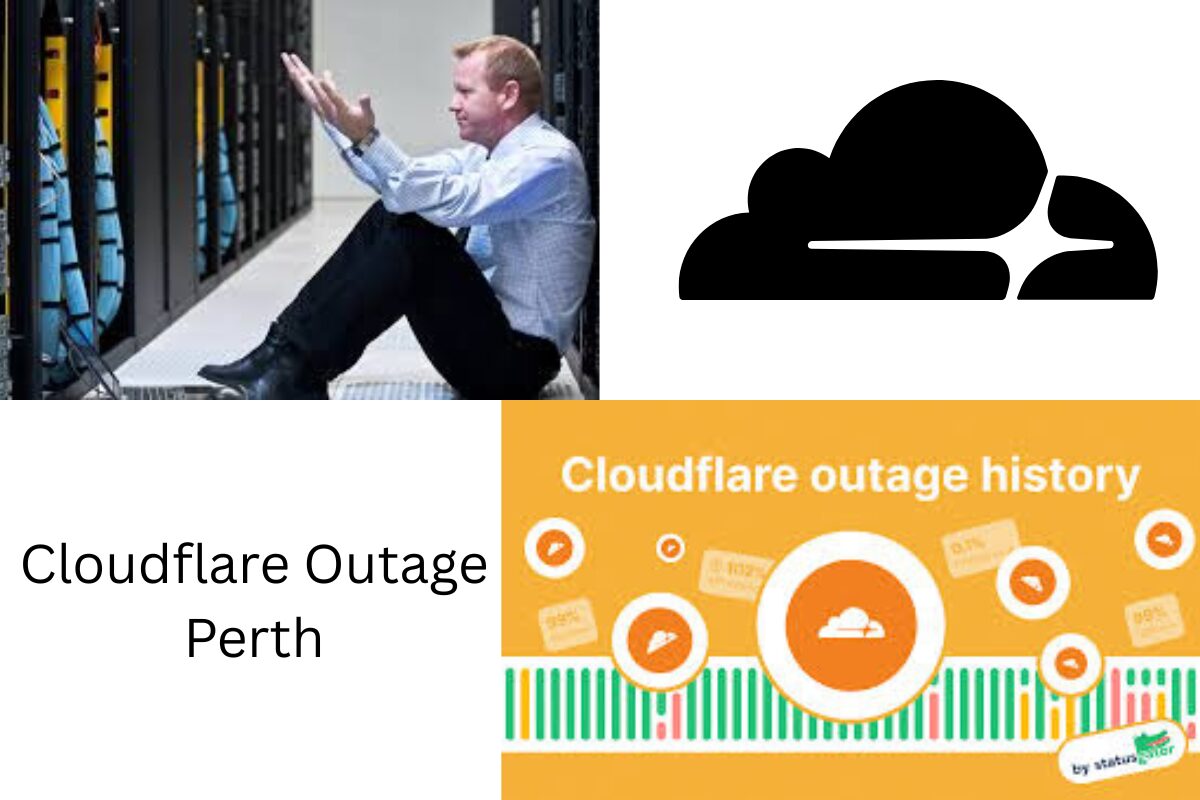
As of publication, no major Australian federal cybersecurity statement has been issued.
No press conference.
No contingency plan briefing.
In a country still recovering from Optus and Medicare data failures, that silence is starting to sound like a vacuum.
The real question Perth should be asking
What happens when the next outage lasts three hours, or eight, or even twenty-four, and what happens if the systems that fail aren’t entertainment sites or social platforms but real-time transport networks, healthcare systems, airport logistics or government service portals — the kinds of services that cannot simply be refreshed or restarted — and we are forced to confront whether Australia actually has meaningful redundancy, sufficient local capacity or any genuine contingency plan, when the honest answer at this moment appears to be “not really.”
Cloudflare resolved the issue within a few hours, most people simply refreshed their apps and moved on, and by tomorrow everything will look normal again, yet beneath that appearance of normality lies an unavoidable truth: Perth — like the rest of Australia — relies on critical digital infrastructure that it does not own, operate or meaningfully control, and while this outage was not a disaster, it functioned as a rehearsal for something far larger, a reminder that one day the rehearsal may turn into the real event.
FAQ Section
About the Author


